
What risks does my home face?
Where you live, when your home was built and how well it’s kept all affect how it handles a cyclone.
Know where you stand.
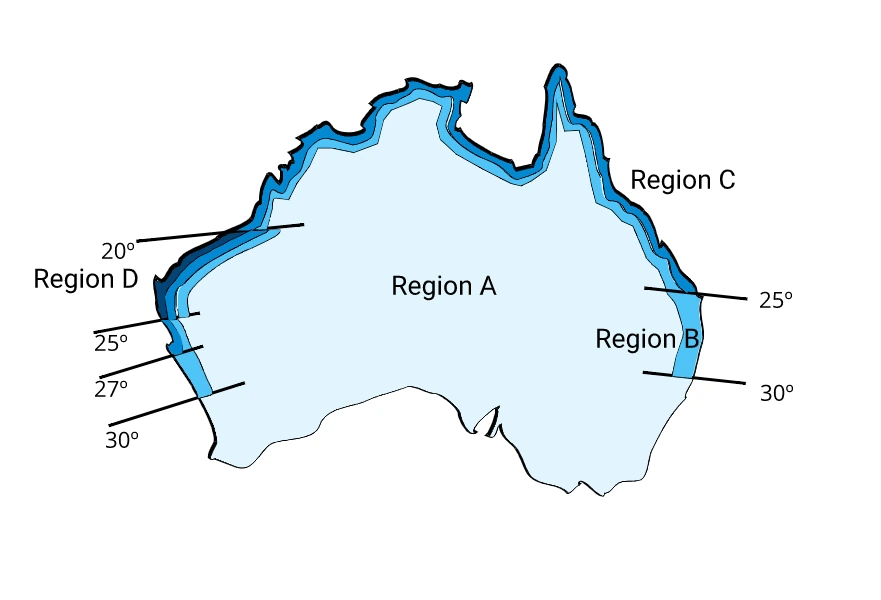
Cyclonic, including Cairns, Townsville and Darwin.
This is a guide. Your council or builder can confirm the wind rating for your address.
A small opening.
A much bigger problem.
If a window or door breaks, wind rushes in and pushes the roof up from inside. The force lifting the roof can more than double.
A house is only as strong as its weakest link
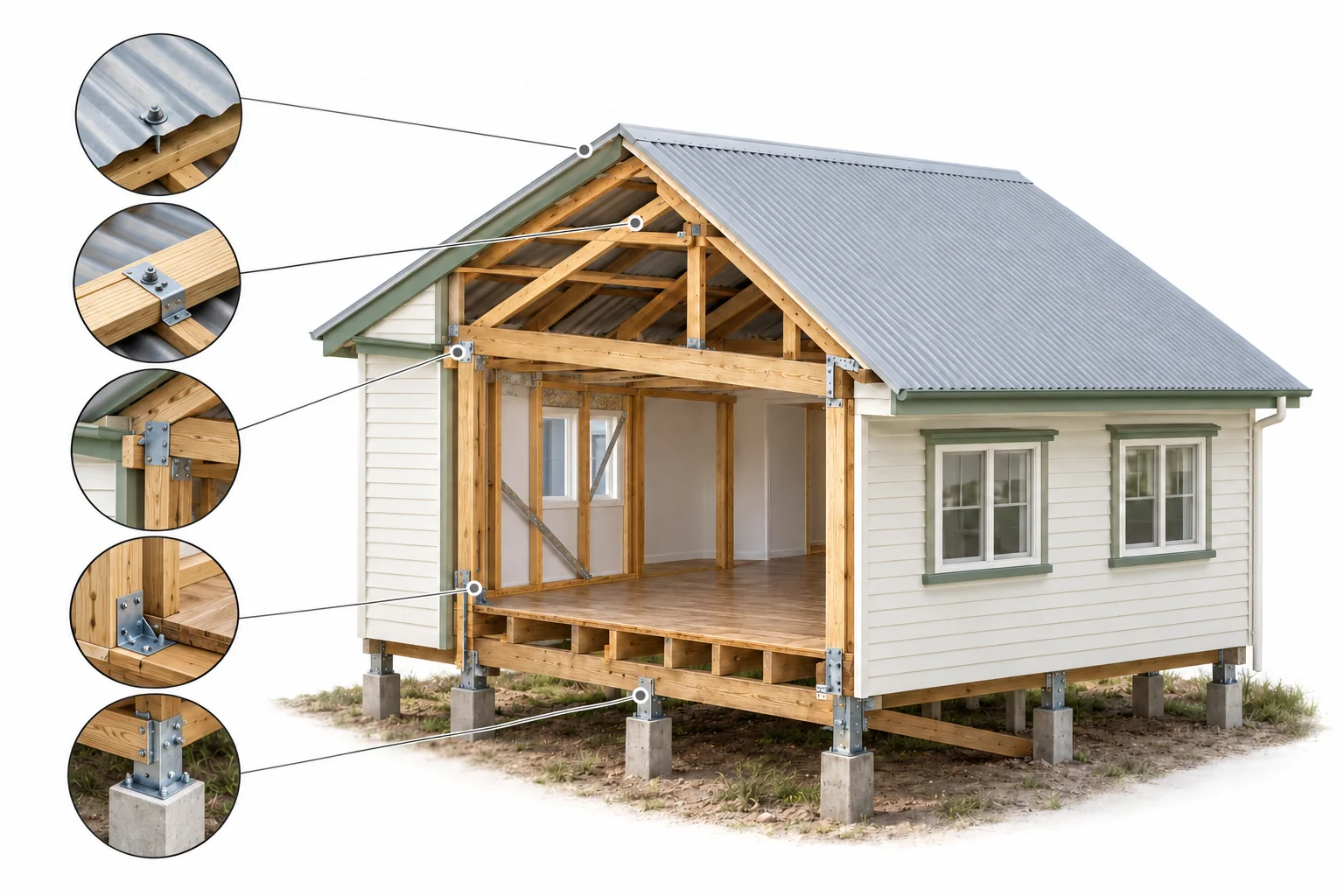
Your roof is held down by a chain of links that runs all the way to the ground. In a cyclone, the weakest link goes first.
- Roof sheets or tiles
- Battens
- Roof ridge
- Inside the roof
- Roof to wall
- Wall to floor
- Floor to stumps
Fix the whole chain. New roof sheets won’t stay on if the battens under them are only nailed down.
Where homes fail
Engineers took these photos after real cyclones. Each shows a different weak link.
Roof sheets lost
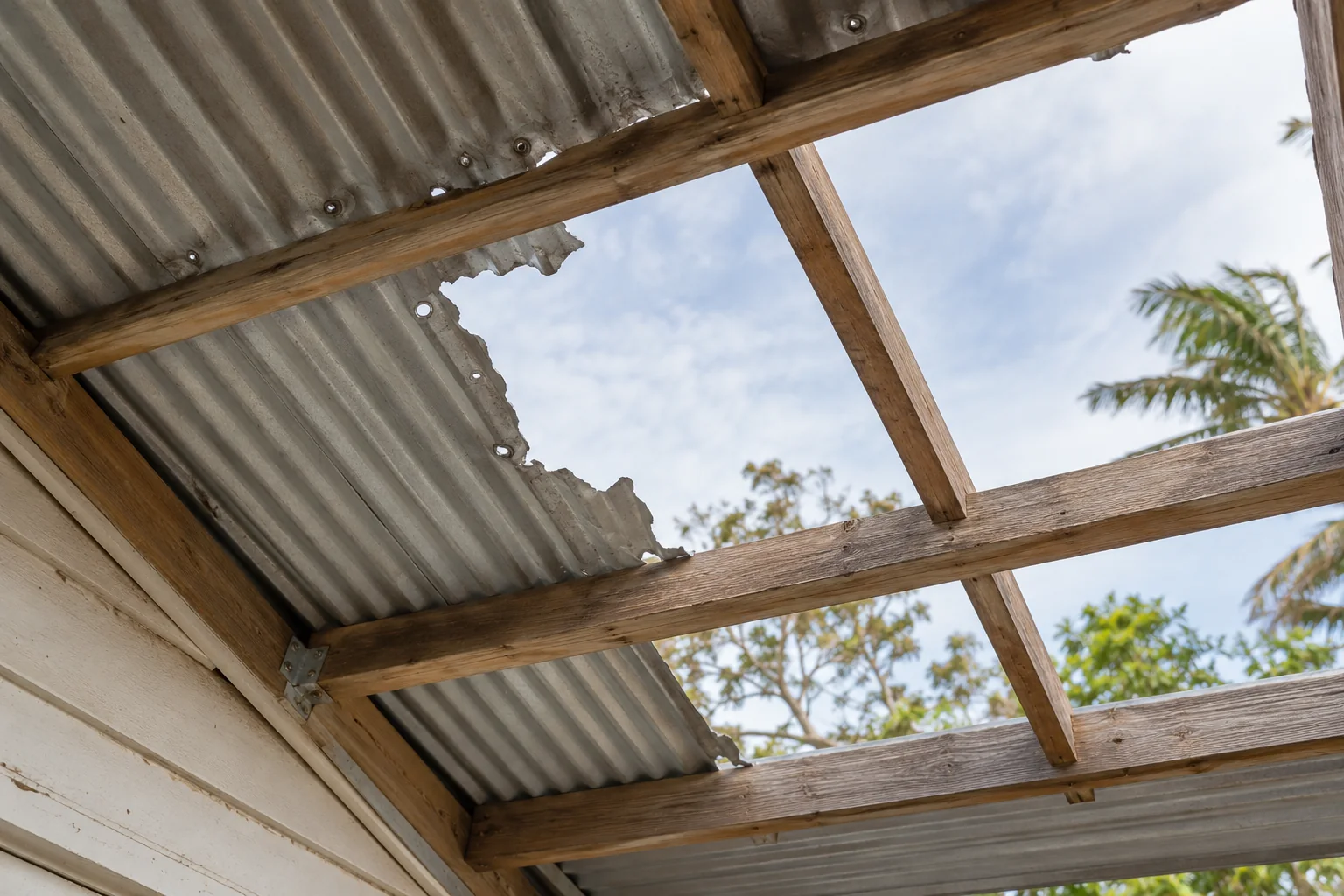
The screws were too far apart, so the sheets tore off while the rest held.
Battens lifted off
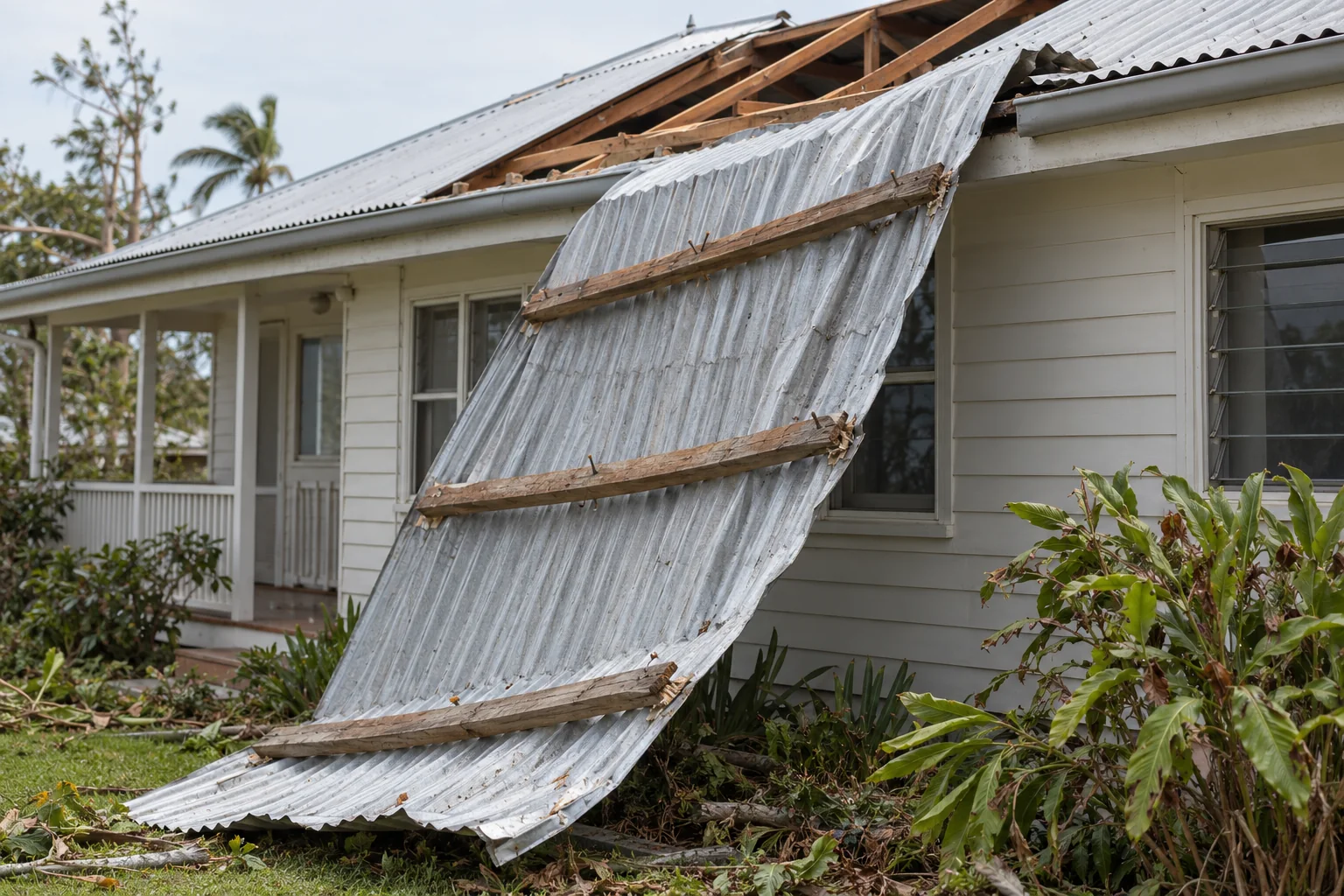
The battens were only nailed down, so they came off with the sheets.
Whole roof lifted
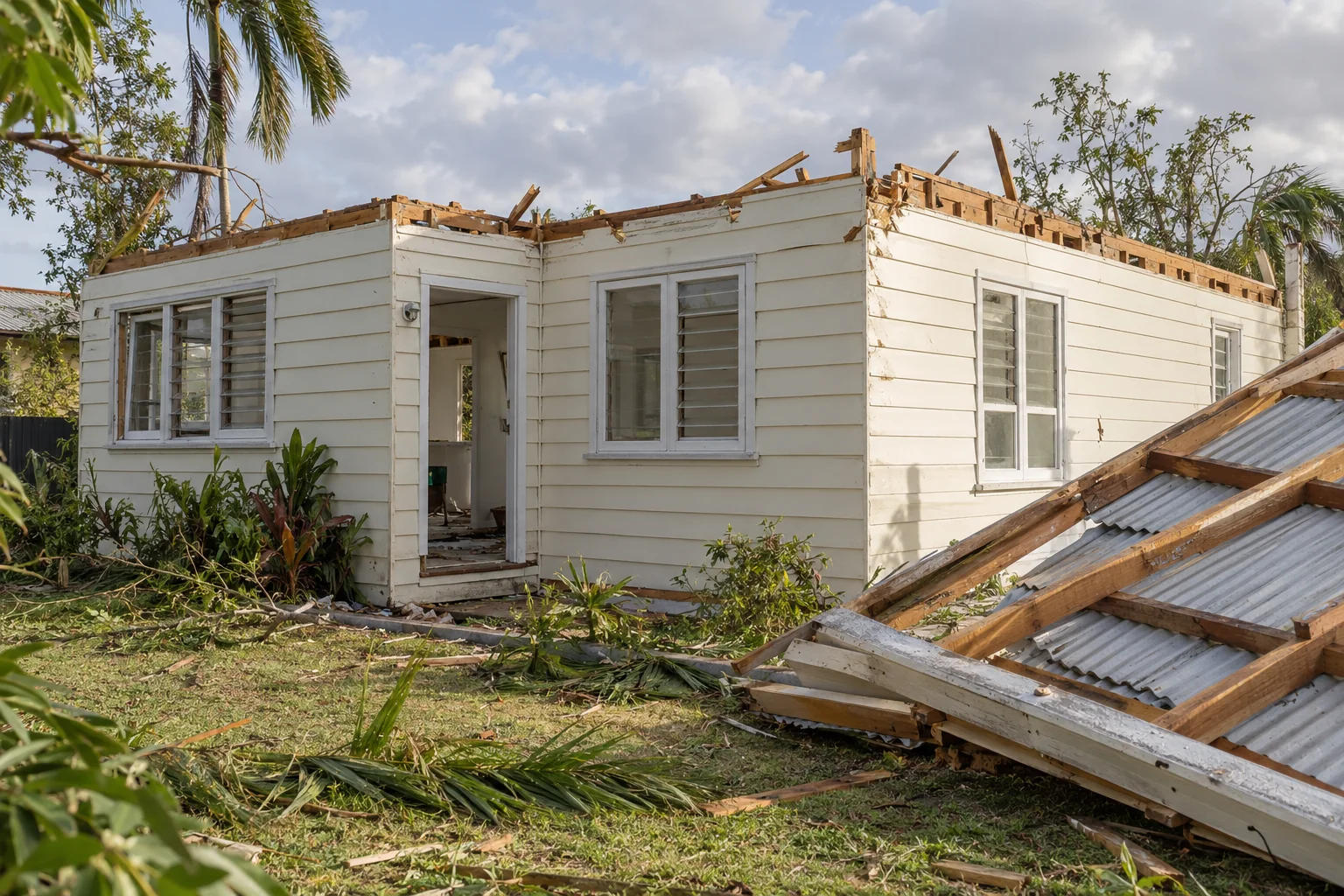
The roof wasn’t tied to the walls, so the whole frame lifted off.
Walls lifted off the floor
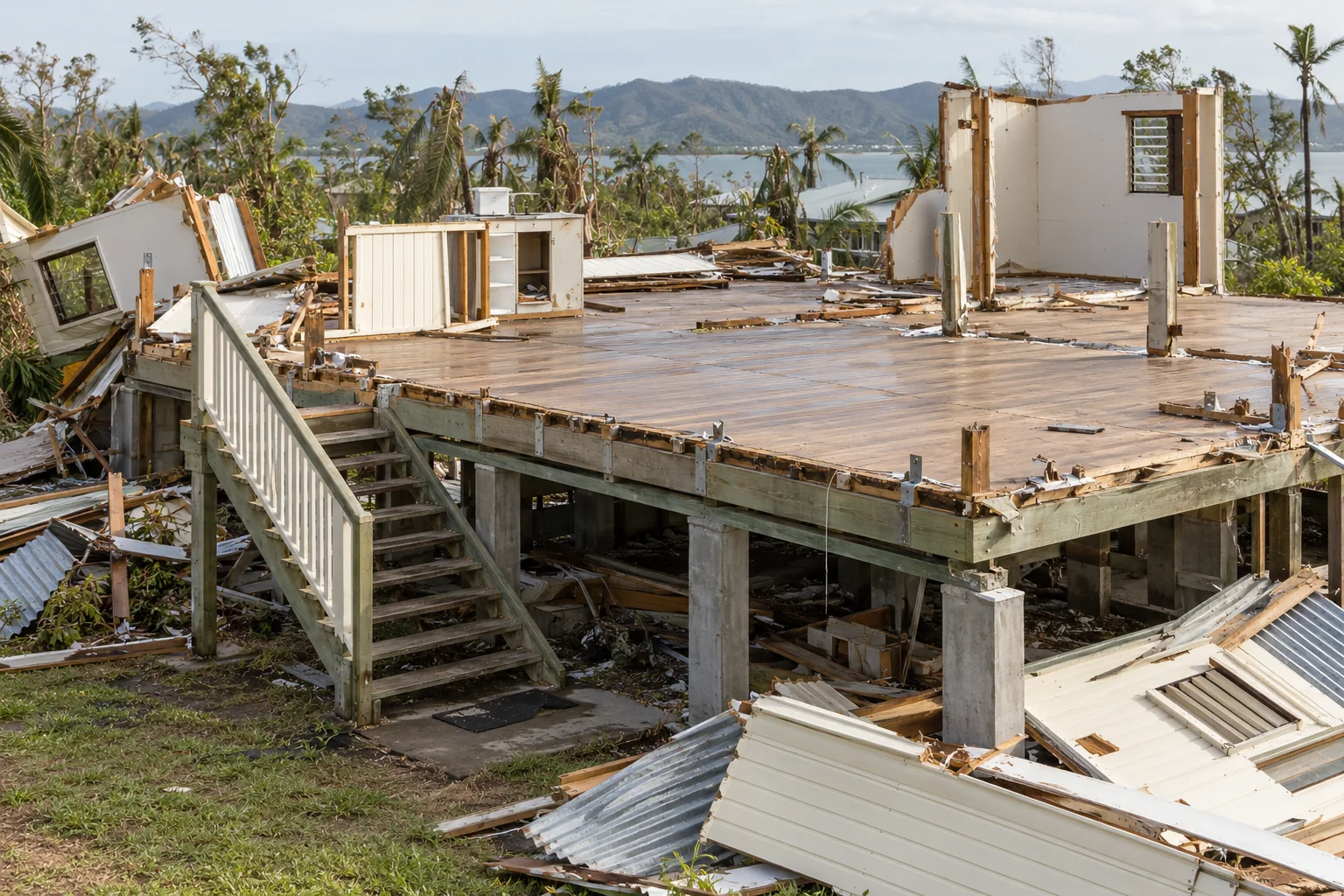
The walls weren’t tied to the floor, so most of the house came away.
Other risks around your home
- Flying debris. Loose items and branches can break windows.
- Water getting in. Rain gets through gaps and blocked gutters.
- Age of the house. Homes built before the mid 1980s were built to older, weaker rules.
- Rust, rot and termites. These quietly weaken connections over the years.
- Storm surge and flooding. Check your council’s flood and storm tide maps.